- Boca Office900 N Federal Highway
Suite 110
Boca Raton, FL 33432 - Tamarac Office7071 W Commercial Blvd
Suite 2C
Tamarac, FL 33319 Follow Us!


Health WellNews
Does Your Liver Need a Spring Tune-Up?
In Traditional Chinese Medicine, each season is ruled by a particular organ system and spring is connected to the liver. What does this mean? Well, you probably notice changes in the way you feel, both physically and mentally, as the seasons change. I know I tend to feel a bit more contemplative and introspective during the winter months. Once spring hits, I’m ready to recharge and get things done. The liver energy is strong and assertive, the type of energy you need to create plans and then propel them into motion. However, if your liver is a little out of balance, you might notice you are more irritable or on edge than usual. Here are a few signs that your liver is in need of an acupuncture tune-up:
1) You’ve noticed an increase in headaches lately, and these headaches seem to feel worse when you aren’t active. Generally, these headaches tend to manifest at the vertex of your head.
2) You might begin to feel constipated or bloated. Your bowel movements might become irregular, alternating between constipation and loose stools. Hard, difficult stools that appear pebbly are also a sign of liver imbalance.
3) Your friends or coworkers are scared of you because you are cranky, cranky, cranky. When liver energy is out of balance, you might feel agitated, irritated and generally out of sorts. Sometimes the irritation can expand into outright anger more easily than it would if this energy was flowing smoothly.
4) Ladies, you may notice your PMS symptoms have been worse lately. Bloating, breast tenderness, sensitivity…you can blame all of the above on your liver. If your periods are more painful or clotted, this is also due to a stagnation of liver energy.
5) Your eyes are red, itchy or irritated.
6) Your shoulders, neck or jaw are uncomfortably tight. If the liver energy is out of balance, it can flow upward. This causes everything in your body to rise up: you might grind or clench your teeth, your shoulders will levitate up around your ears, and you might experience symptoms of TMJ.
7) Your allergies are in full force. Common symptoms among allergic rhinitis include runny nose, sneezing, watery eyes, swelling around the eyes, persistent cough, sinus headaches, earaches and more.
Lose It: Weight Loss And Traditional Chinese Medicine
Traditional Chinese Medicine (TCM) can help with weight loss by evaluating the root of the problem. Acupuncture and herbs, along with changes in diet and an exercise plan, can help curb appetite, assist the digestive system, transform and transport food throughout the body and encourage regular elimination.
Here are three main contributors to weight gain and how TCM addresses them.
Hormones: Testosterone and estrogen imbalance can be likened to yin and yang. Yin is more feminine, still, dark, quiet, inward and moistening (our fluids are yin) and is likened to estrogen. Yang is more masculine, loud, outward, moving, hot and bright. It is likened to testosterone. The body continually achieves balance between these two elements. As we age, the hormone levels of testosterone and estrogen adjust and can create changes in the body such as weight gain. For example, women with higher estrogen develop increased fat storage, and women prescribed estrogen may be prone to weight gain. Treatment would include an herbal formula designed to adjust the hormones and a diet recommendation that would include foods that nourish yin, such as yams.
Dampness: In TCM the term dampness refers to water retention combined with fat stores due to overstimulation of insulin from poor diet and overeating. If this happens chronically, it weakens the spleen system (which is in charge of transformation and transportation of food in TCM, a different definition than that of the Western-medicine spleen).
Long-term depletion causes blockage of organs and channels leading to serious health risks for the kidney, spleen, heart and lungs. This happens in stages as acute damp retention becomes chronic and leads to deficiencies in the spleen and kidney, which leads to more chronic phlegm retention. An obese person would experience health issues such as diabetes and heart disease in this case. Treatment is best in the early, acute stages where dampness is still primarily middle-heavy. Herbs and acupuncture would drain the damp and a new diet would be implemented to prevent future issues. Foods such as barley, and soups to warm the spleen are benecial.
Eating habits and lifestyle: Overeating, eating quickly, indulging in processed foods and foods too cold, such as iced drinks and raw vegetables, impair the smooth function of the digestive system. Stress and irregular eating habits also can cause weight gain, as well as eating sugar to boost sagging energy or to calm emotions. In addition, eating heavily at night is not advisable because the body burns at a slower rate at night as it replenishes the yin cycle. Treatment in this case would include an adjustment in lifestyle and acupuncture for stress relief and appetite control.
TCM does not just see food biochemically. Food has qualities including temperature, taste, shape and color, which benefit specific organs and encourage their smooth function. For example, sour and green foods benefit the liver, bitter and red foods benefit the heart, and pungent, white foods benefit the lungs. If one has too much yang energy, there is too much heat and therefore cooling foods such as watermelon and cucumber would help achieve balance. In the case of a decline in yang, one would feel cold, so warmer foods like lamb and ginger would benefit. If one has too little yin, heat signs are present because the yang has become more exuberant. You would nourish the yin in this case with foods like yams or goji berries. Not only will the weight gain be addressed but the root of the issue as well. Ask me if you’re interested in learning more about TCM for your weight loss goals.
Gua Sha for Healthy Skin
There are many elements to keeping our skin healthy and vibrant. For instance, are we giving our bodies enough water each day? Are we eating healthy, organic, whole foods? Are we getting enough sleep? Are we dealing with our daily stressors? All of these things can affect how we feel on the inside and how we look on the outside. But in today’s busy society, many rarely take the time to care for themselves. This can show on our faces in the form of wrinkles, dry lackluster skin and even discoloration.

There is hope to fix this, and it’s called Gua Sha. Gua Sha may be just what the doctor ordered for attaining healthy skin.
Gua Sha is a technique that involves the quick, repetitive scraping of a flat jade, natural horn, ceramic or metal tool across the skin to relieve tension and pain and stimulate lymphatic drainage. It can be used anywhere on the body, but is frequently used as a part of facial acupuncture treatments.
Facial Gua Sha is gentler than when it is utilized in other areas of the body. When performing Gua Sha on the face, the tool is pulled along the skin instead of the deep scraping used on other areas. Also the tools used on the face are usually made of jade, rose quartz or porcelain, which provides a cooling sensation on the skin surface. The purpose of Gua Sha on the face is to increase lymph drainage and release facial muscle tension.
The lymphatic system relies on movement. We tend to get this vital movement through exercise or massage. But if you’re not engaging in regular exercise, the lymphatic system can become sluggish and clogged. This means that it doesn’t perform optimally. When lymph fluid is circulating and draining properly, added Gua Sha can reduce inflammation and increase the body’s ability to remove toxins and dirt that have built up in the skin. This means less facial puffiness, clearer sinuses and less acne.
Facial Gua Sha can be beneficial for reducing tension held in the face and neck areas too. This may lead to fewer headaches, less jaw tightness and decreased neck pain. For people who clench their teeth, Gua Sha can be a game changer because it releases the tension built up in the muscles.
One more thing that facial Gua Sha provides is exfoliation. The action of gentle scraping on the face improves blood flow and allows for the dead skin cells to slough off more easily and frequently. This can even out facial skin tone, creating a radiant, healthy complexion.
If you are concerned about your skin tone, fine lines and wrinkles or you are experiencing neck and jaw pain, facial Gua Sha might be the extra tool you need.
Acupuncture for Carpal Tunnel
As the weather warms, so too does the desire to be more active and spend time outside with friends and family. If you’re someone who spends a lot of the day on the computer, or in a job that requires other repetitive motions in your wrists and hands, you might be walking into summer in pain and wary of any upcoming bocce ball tournaments.

In some cases, repetitive movements of the wrist and fingers, including typing, can lead to carpal tunnel syndrome. Characterized by pain in the wrist and hand, carpal tunnel syndrome means the median nerve, which runs from the forearm to the wrist to the hand, has been compressed. This compression causes pain, numbness, tingling and occasional weakness of the wrist, arm and hand.
Conventional medicine treats true carpal tunnel syndrome with splints, non-steroidal anti-inflammatory medications and cortisone shots. If none of these work, then surgery is recommended. Carpal tunnel surgery is the second most common type of surgery in the United States, following back surgery.
However, many people who develop wrist pain are misdiagnosed with carpal tunnel syndrome and sent to surgery when it isn’t needed. This can lead to further, more serious complications. It’s important to find out if your discomfort is being caused by true carpal tunnel syndrome or just inflamed trigger points that need attention. When trigger points are “upset,” the pain can actually mimic the symptoms of carpal tunnel syndrome.
Traditional Chinese Medicine (TCM) utilizes acupuncture, as well as many other modalities, to treat pain associated with carpal tunnel syndrome. Acupuncture and electroacupuncture can be extremely beneficial for those suffering from this condition. A study conducted by Massachusetts General Hospital demonstrated acupuncture and electroacupuncture not only decrease pain, but also remap the brain. Before and after MRIs showed the carpal tunnel-related damage to the somatosensory cortex was repaired in participants who received acupuncture. This means those subjects actually showed continued improvement over time and their ability to function improved, too.
Acupuncture is a safer alternative to NSAIDs, cortisone shots and surgery. Studies confirm acupuncture decreases inflammation and restores function to tight muscles and tendons. Many studies show acupuncture eliminates the pain source rather than just masking the symptoms. Acupuncture is cheaper, less invasive and has a much higher probability of providing permanent relief. But in order to do this, the proper diagnosis must be made.
As mentioned before, angry trigger points can mimic carpal tunnel pain. Acupuncture can also be very beneficial for those experiencing trigger-point pain. Any one of the many muscles in the arms can become angry from repetitive motion. By stimulating painful trigger points with acupuncture needles, the muscles fire and release. This allows the muscle fibers to return to a relaxed state, relieving pain.
Wrist pain can be a serious burden for those who suffer from it, but before writing off the possibility of all summer lawn games this year, consider giving acupuncture a try.
Cupping in Chinese Medicine
Have you seen those dark purple cup marks on the upper back of your favorite celebrity lately and wondered what that was all about? That is from an ancient Chinese medicine technique called cupping, which is a wonderful and effective supplement to an acupuncture treatment.
Cupping describes the practice of Chinese medical practitioners using thick glass cups in certain regions of the body to relieve pain and for other medicinal uses. In what is called “fire cupping,” the acupuncturist takes the glass cup, saturates a cotton ball with alcohol and applies a small flame to the cotton. The cotton is then placed in the glass cup (with lightning speed and accuracy) whereby the oxygen is removed from the glass and the skin is suctioned up tightly. What the cup is doing is drawing pressure out and up. Nowadays, some practitioners use plastic suction cups or cups made of bamboo.
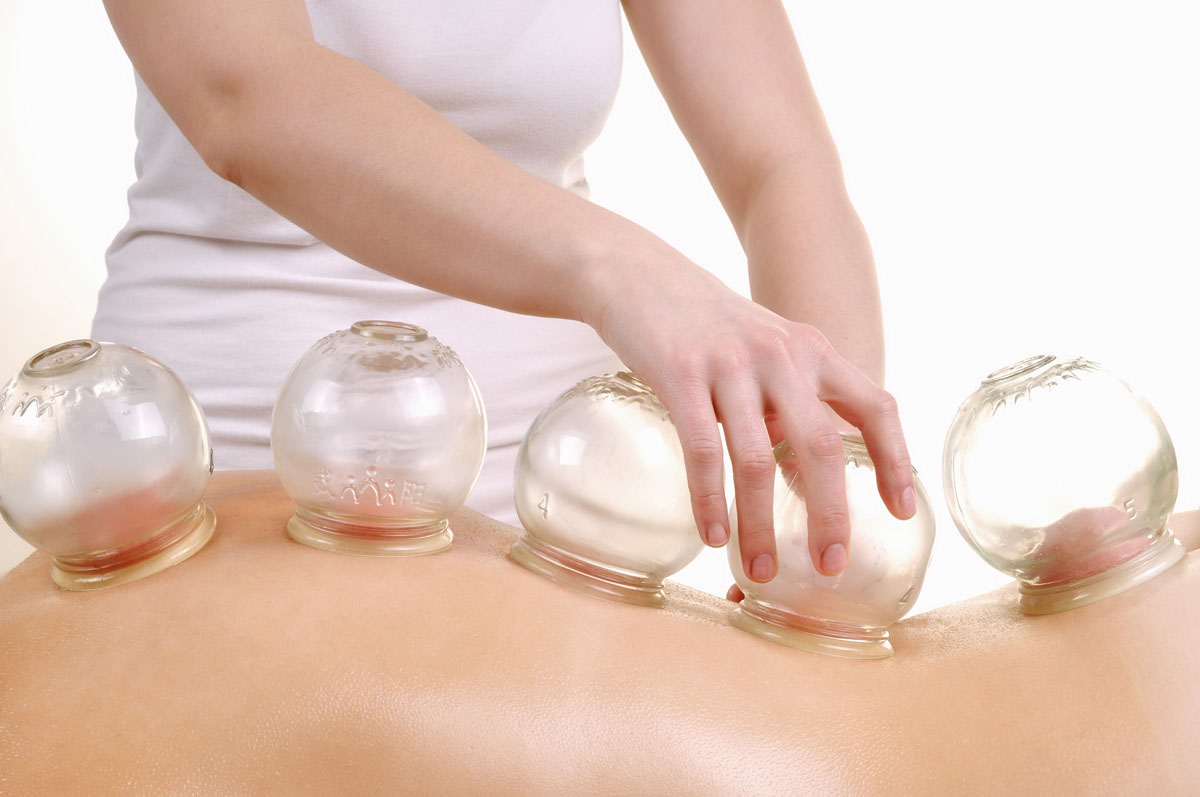
There are two types of cupping: one is “dry cupping” and is the most common. This is where the cup stays put for about five minutes or more. The acupuncturist may in some instances use a small lancet to draw out a tiny amount of blood from an area before placing the cup over the region in what’s called “wet cupping.” The next type is called “moving cupping” and is the most pleasurable experience. This is when oil is put on the skin before the cup is suctioned so that the cup can be moved along a large region, for example, down your back. This feels like a massage and is very relaxing and helpful for stiffness. Multiple cups are typically used for any of these forms of cupping.
Why cupping?
Cupping promotes blood flow, eases stiffness and pain, especially in the back, neck, and shoulders and lifts tense muscles. By promoting better circulation through cupping, tissues receive vital nutrients and oxygen. Cupping releases stagnation of blood and lymph fluid and removes harmful toxins. It has been shown to help respiratory ailments and the common cold, muscle conditions, stress, arthritis, digestion and gynecological issues.
Cupping feels wonderful during and after treatment, but any bathing suit modeling or cruise vacations should be postponed a few days after therapy due to local redness or purple color and perhaps bruising of the area. You might have a small cup mark, but this is very common, it should dissipate in a couple of days, and is not harmful. Of course, if you experience any other acute complications, see your physician.
Certain conditions are contraindicated for cupping techniques and your acupuncturist will advise against treatment. These conditions include broken skin, skin ulcers, high fever, inflammation, thin skin that bleeds easily, pregnancy (no cupping on the abdomen) and bony areas of the body.
Cupping is an old therapy, and although some patients have mentioned seeing their grandparents apply cupping using glass jars, it is not recommended to self-diagnose or to try fire cupping at home on your own. It can be dangerous and you could get a severe burn or blisters. See your friendly acupuncturist to give you a relaxing cupping treatment that is both safe and effective.